Hook
“Free” is a dangerous word in pharma quality.
Not because the tool has no price tag. Because somebody always ends up paying for it anyway.
Real-world scenario
A team starts with what looks like a practical setup.
A spreadsheet for document tracking.
Email for approvals.
A shared drive for SOPs.
Another tracker for training.
Maybe a few people swear it is working because the files are all somewhere.
Most weeks, that is enough to get by.
Then the work gets busier. A SOP changes. A deviation lands. Someone wants to know whether the right people were trained on the right version. Now the team is doing the thing every QA lead hates: trying to reconstruct the story from scattered records.
That is when “free” starts feeling expensive.
And you usually do not get a long window to figure it out. The inspector wants the record, the timing, and the explanation now.
What actually gets paid for
The hidden cost is not software licensing. It is the QA tax that keeps building in the background.
If a QA manager spends 10 or 15 hours a week chasing version history, checking spreadsheets, and asking people to confirm what changed, that is not free. That is paid labor moving into manual cleanup.
The cost shows up in a few places:
- time spent checking whether the current version is really current
- QA hours used to rebuild audit history instead of managing quality
- duplicate trackers that grow because nobody trusts the first one
- delays when change, training, and CAPA are not aligned
- stress when someone asks for the story and the story is split across three tools
Callout: free tools do not remove cost
They move the cost into time, risk, and reconstruction.
That is why a tool with no license fee can still be the most expensive thing in the room.
Why inspections expose it
The problem is not obvious until someone outside the team starts asking questions.
FDA guidance on computerized systems expects audit trails, retrieval, retention, and record integrity to hold up. Part 11 exists because electronic records still need to be trustworthy when people inspect them later.
That is where free tools usually bend:
- the audit trail is too thin
- version history is not enough to defend the current record
- approvals are easy to miss
- linked training and change records live somewhere else
- nobody wants to be the person explaining why the record took an afternoon to reconstruct
An inspector does not care that the spreadsheet was free. They care whether the record can survive being challenged.
What a connected system saves you from
A proper quality system does not just store files.
It reduces the weird little jobs that otherwise land on QA:
- checking whether the right version is still in circulation
- asking three people which tracker is real
- chasing signatures after the fact
- proving the change, training, and approval path separately
- rebuilding an audit trail from memory and exports
That is the part people underestimate. The software is not the cost. The work around the software is.
What Complere changes
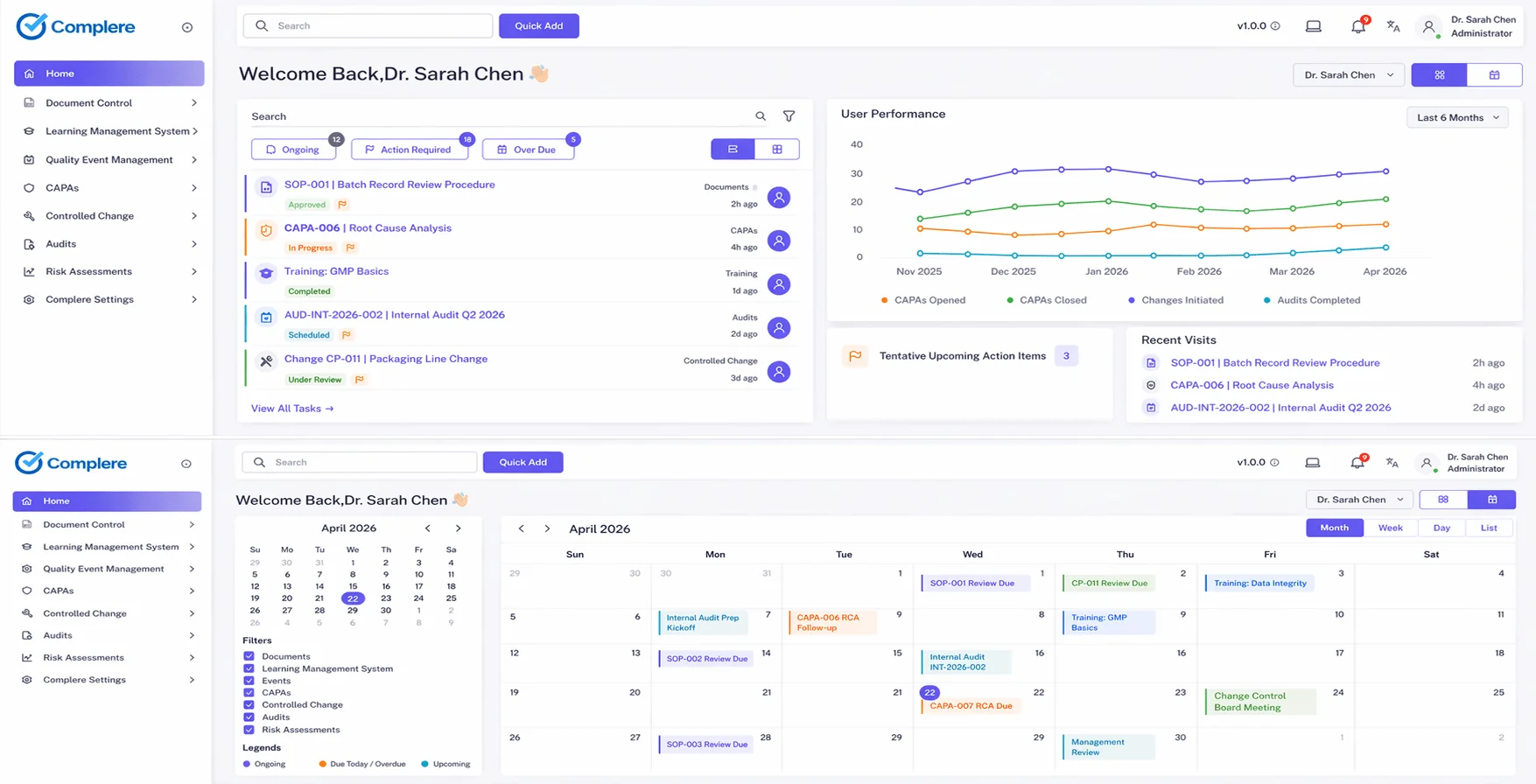
Complere does not make quality free. It makes the hidden cleanup visible and smaller.
It helps teams stop paying the QA tax in the background by keeping the approved record, the change, and the follow-up tied together.
- the record is easier to retrieve when somebody asks for it
- approvals and follow-up stay attached instead of getting split across tools
- training and change are easier to line up with the current version
- QA spends less time reconstructing and more time controlling the work
We did not build it to replace one spreadsheet with a fancier spreadsheet. We built it because “free” quality tools usually become very expensive the moment someone asks for proof.
Download template
If your team still relies on free tools, use a blunt checklist.
Ask:
- How many hours a week does QA spend checking and rechecking records?
- Can we show the current version without a scavenger hunt?
- Are approvals and training tied to the same change?
- How long would it take to build the inspection story if someone asked today?
- Who pays for the cleanup when the tools don’t connect?
If the answer is “the QA team,” then the tool is not free.
Closing thought
Free tools do not eliminate cost.
They just hide it in labor, delay, and inspection panic.
That is the part pharma teams feel later, when the record needs to stand up and the shortcuts stop working.